

Back-to-School Season: Capitalizing on Late-Summer Procurement Opportunities
Late summer is one of the most overlooked sales windows in K-12. Learn how new fiscal-year budgets, unspent funds, cooperative purchasing contracts, and rapid procurement pathways create opportunities for education vendors prepared to move quickly.

Proposal Pricing Strategies for Education Contracts
Pricing can make or break a K-12 RFP response. Learn how to choose the right pricing model, benchmark against the market, and justify your pricing with value-based strategies that improve competitiveness and protect profitability.
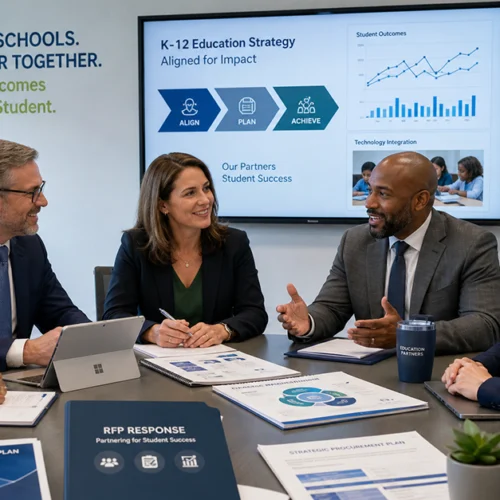
How State and District Alignment Strengthen the RFP Process
Winning K-12 RFPs requires more than strong writing. Learn how state positioning, district alignment, category messaging, and post-win accountability help vendors build trust and increase proposal success rates.
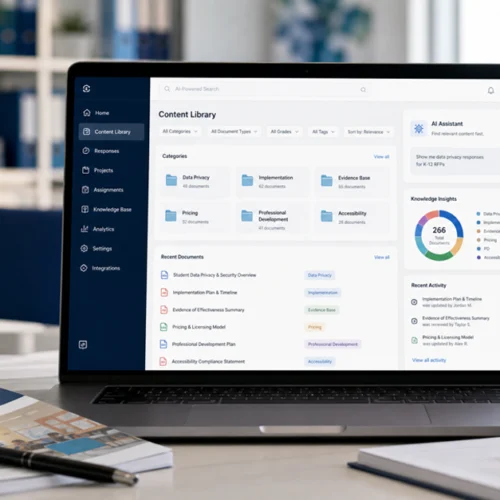
Building Your Education Proposal Content Library (Part 2)
A well-managed education proposal content library can dramatically improve response speed, consistency, and win rates. Learn how to audit existing content, build an effective tagging structure, establish governance, and leverage AI to create a scalable K-12 proposal management system.
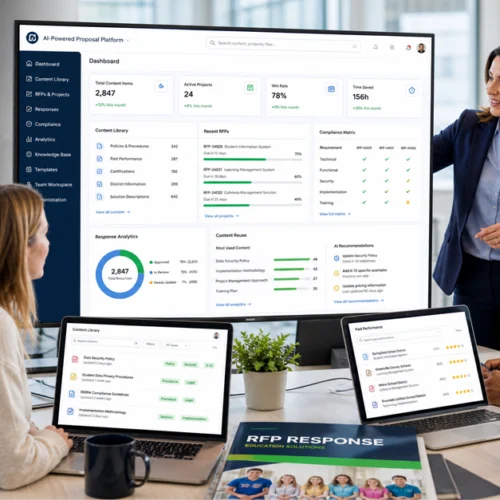
Building Your Education Proposal Content Library: Content libraries and their alternatives (Part 1)
This post is a quick-reference guide for selecting, framing, and placing proof points that do the most work in the least amount of space.

Understanding Outcomes-Based Contracts in K-12 Education
Jackson Public Schools’ outcomes-based contracting model highlights how accountability, data sharing, and flexibility can help districts and providers improve student outcomes.

The Executive Summary That Wins: Proof Points and Past Performance (Part 2)
This post is a quick-reference guide for selecting, framing, and placing proof points that do the most work in the least amount of space.
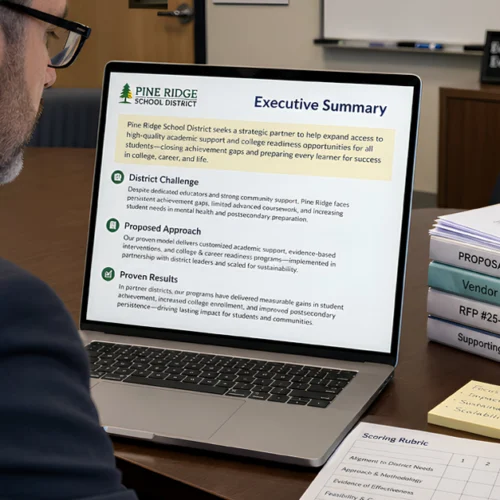
Writing for the Education Evaluator: Tone, Language, and Approach
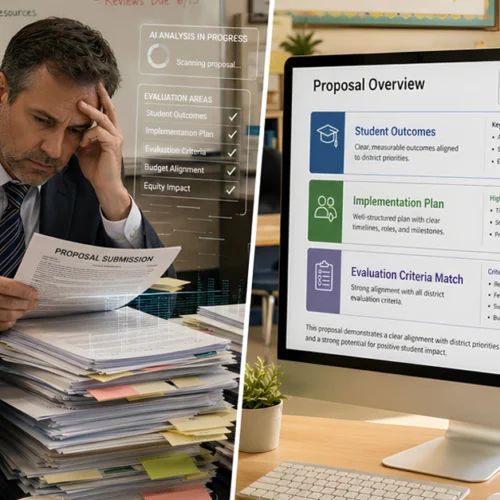
K-12 evaluation committees are scoring more proposals than ever, and increasingly using AI-assisted tools to do it.

Using AI Responsibly in Your RFP Responses: A Practical Guide
Using AI in your RFP process isn’t a binary choice. It doesn’t mean either handing your proposal off to a chatbot or avoiding it altogether because it feels risky.

How School Districts Evaluate Proposals: Inside the Scoring Process
Most vendors optimize for quality. The districts scoring their proposals are optimizing for something else entirely. This post breaks down how evaluation really works…

Compliance Matrix Mastery: Scoring Higher on Technical Evaluations (Part 2)
Strong compliance matrices win K-12 RFPs by making evaluation teams confident in their choice. This guide shows how to structure responses so procurement can verify requirements efficiently…

Compliance Matrix Mastery: Never Miss a Requirement Again (Part 1)
Miss a requirement, lose the bid. It sounds simple, but compliance gaps are one of the most common reasons strong proposals fall short in K-12 evaluations. This guide introduces compliance…

AI Spending Is Already Happening in K-12. Are You Ready for the RFP?
A discussion around how districts are currently buying AI tools, and how AI companies can position themselves to be successful with AI services RFP’s…

The K-12 Procurement Cycle: Navigating District Budgets and Funding Sources
For K-12 vendors, understanding the funding landscape is a starting point — not a strategy. District budget decisions are shaped by accountability and risk as much as by dollars available…

The K-12 Procurement Cycle: Key Decision Makers and Influencers
For K-12 districts, procurement decisions are shaped by more than timing. They are influenced by the individuals who define needs, frame implementation expectations…

The K-12 Procurement Cycle: Timing Your Outreach for Maximum Impact
For K-12 districts, the procurement cycle starts long before RFPs are released. Vendors who engage early and understand how instructional priorities…

How School Announcements Fuel School Climate & Inclusion + Lessons Learned in K-12 Procurement
Morning announcements are easy to dismiss as background noise—a few reminders, a lunch menu, a birthday shoutout. But when done well, they create shared rituals, make students feel seen…

Strategic Workflow & RFP Version Control
Strategic Workflow & RFP Version Control Organizations that compete in public-sector procurement often focus their energy on external factors: the narrative, pricing, evidence base, alignment, program strength, or past performance. Companies that respond consistently and clearly usually share one foundational trait: a disciplined system for storing information, managing versions, documenting

Post Award Procedures
Post Award Procedures Post-Award Strategy for Kickoff, Reporting, and Sales Enablement Winning an RFP is often treated as a finish line, but the award is the beginning of a new phase. A strong proposal opens the door; post-award discipline decides what happens once you walk through it. There is a