

How State and District Alignment Strengthen the RFP Process
Winning K-12 RFPs requires more than strong writing. Learn how state positioning, district alignment, category messaging, and post-win accountability help vendors build trust and increase proposal success rates.
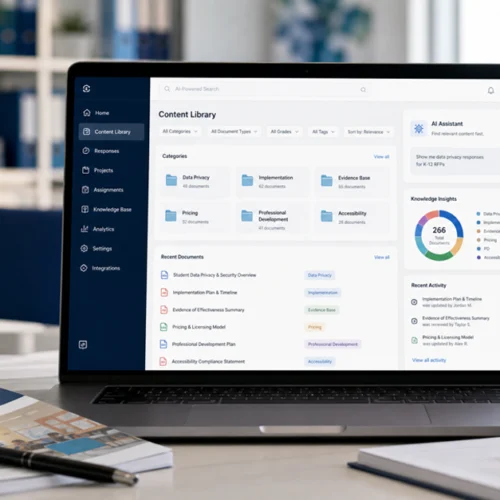
Building Your Education Proposal Content Library (Part 2)
A well-managed education proposal content library can dramatically improve response speed, consistency, and win rates. Learn how to audit existing content, build an effective tagging structure, establish governance, and leverage AI to create a scalable K-12 proposal management system.
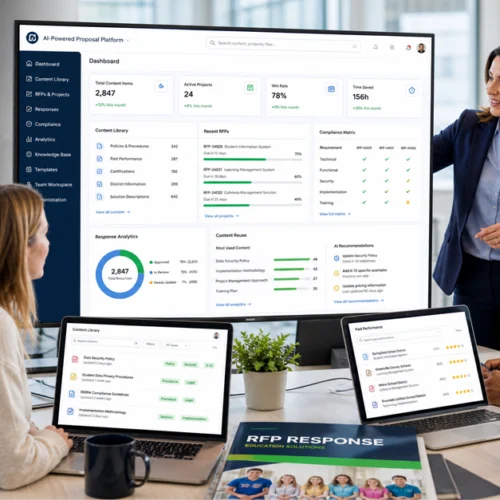
Building Your Education Proposal Content Library: Content libraries and their alternatives (Part 1)
This post is a quick-reference guide for selecting, framing, and placing proof points that do the most work in the least amount of space.

Understanding Outcomes-Based Contracts in K-12 Education
Jackson Public Schools’ outcomes-based contracting model highlights how accountability, data sharing, and flexibility can help districts and providers improve student outcomes.

The Executive Summary That Wins: Proof Points and Past Performance (Part 2)
This post is a quick-reference guide for selecting, framing, and placing proof points that do the most work in the least amount of space.
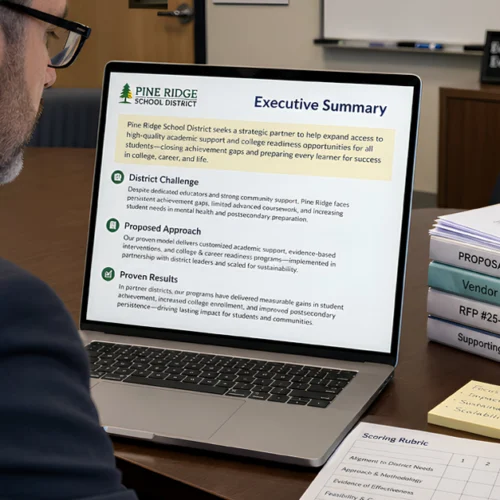
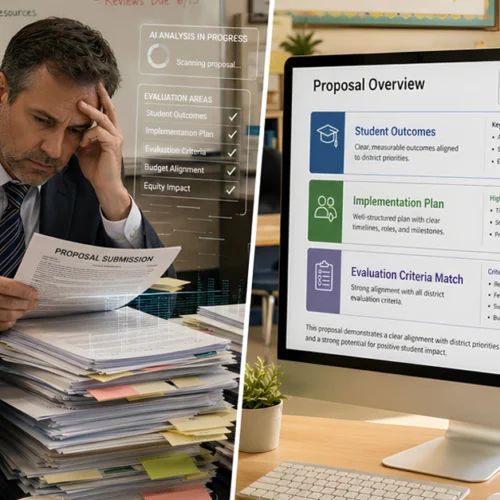
Writing for the Education Evaluator: Tone, Language, and Approach
K-12 evaluation committees are scoring more proposals than ever, and increasingly using AI-assisted tools to do it.

Using AI Responsibly in Your RFP Responses: A Practical Guide
Using AI in your RFP process isn’t a binary choice. It doesn’t mean either handing your proposal off to a chatbot or avoiding it altogether because it feels risky.

How School Districts Evaluate Proposals: Inside the Scoring Process
Most vendors optimize for quality. The districts scoring their proposals are optimizing for something else entirely. This post breaks down how evaluation really works…

Compliance Matrix Mastery: Scoring Higher on Technical Evaluations (Part 2)
Strong compliance matrices win K-12 RFPs by making evaluation teams confident in their choice. This guide shows how to structure responses so procurement can verify requirements efficiently…

How State and District Alignment Strengthen the RFP Process
Winning K-12 RFPs requires more than strong writing. Learn how state positioning, district alignment, category messaging, and post-win accountability help vendors build trust and increase proposal success rates.

Building Your Education Proposal Content Library (Part 2)
A well-managed education proposal content library can dramatically improve response speed, consistency, and win rates. Learn how to audit existing content, build an effective tagging structure, establish governance, and leverage AI to create a scalable K-12 proposal management system.

Building Your Education Proposal Content Library: Content libraries and their alternatives (Part 1)
This post is a quick-reference guide for selecting, framing, and placing proof points that do the most work in the least amount of space.

Understanding Outcomes-Based Contracts in K-12 Education
Jackson Public Schools’ outcomes-based contracting model highlights how accountability, data sharing, and flexibility can help districts and providers improve student outcomes.

The Executive Summary That Wins: Proof Points and Past Performance (Part 2)
This post is a quick-reference guide for selecting, framing, and placing proof points that do the most work in the least amount of space.
Writing for the Education Evaluator: Tone, Language, and Approach
K-12 evaluation committees are scoring more proposals than ever, and increasingly using AI-assisted tools to do it.

Using AI Responsibly in Your RFP Responses: A Practical Guide
Using AI in your RFP process isn’t a binary choice. It doesn’t mean either handing your proposal off to a chatbot or avoiding it altogether because it feels risky.

How School Districts Evaluate Proposals: Inside the Scoring Process
Most vendors optimize for quality. The districts scoring their proposals are optimizing for something else entirely. This post breaks down how evaluation really works…

Compliance Matrix Mastery: Scoring Higher on Technical Evaluations (Part 2)
Strong compliance matrices win K-12 RFPs by making evaluation teams confident in their choice. This guide shows how to structure responses so procurement can verify requirements efficiently…